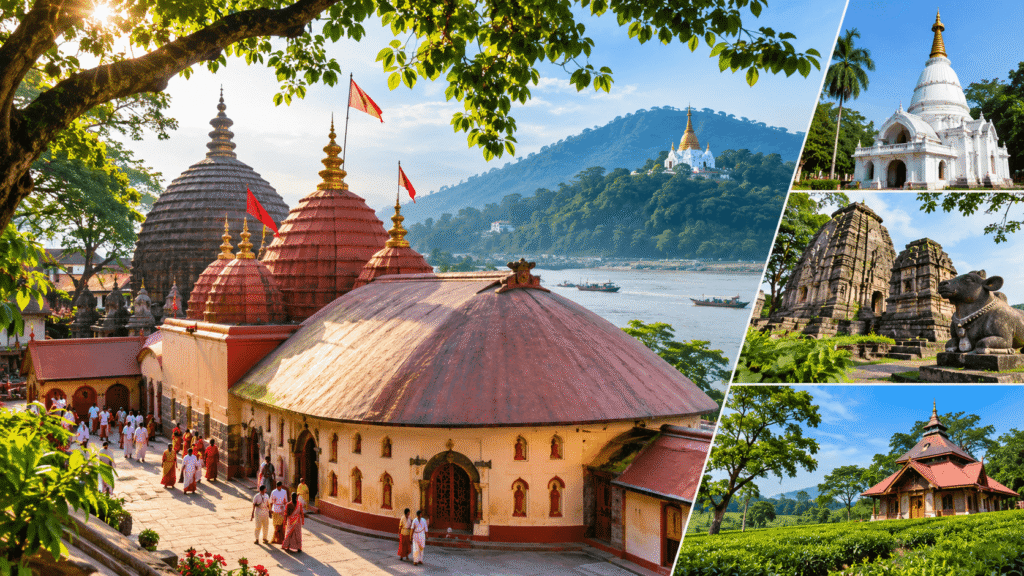
Religious tourism is often seen simply as people travelling to temples, shrines, monasteries or sacred sites. But it is much more than that. It is an economic ecosystem—one that can create opportunities for entrepreneurs across hospitality, food, transport, handicrafts, cultural experiences and digital services. For Assam, where faith is deeply connected to history, community life and cultural identity, religious tourism can become a powerful engine of entrepreneurship, employment and inclusive economic growth.The real opportunity is not just to bring more visitors to Kamakhya, Majuli or Hajo. It is to build an ecosystem of local enterprises that serve pilgrims and travellers while creating sustainable livelihoods for communities.
More Than a Visit to a Sacred Site
A pilgrimage destination is not just a temple, monastery or sacred riverbank. It is a local economic cluster.A pilgrim may come to pray, but they also need a place to stay, food to eat, transport to use, information to navigate the journey, and something meaningful to take home. Every one of these needs can become an opportunity for a local business. A homestay can host visitors. A self-help group can supply flowers, incense or packaged prasad. A weaver can sell traditional textiles. A guide can lead a heritage walk. A local technology startup can provide online bookings, route information or multilingual audio guides. When these businesses work together, the impact becomes much larger. Hotels can source food from local farmers. Tour operators can hire local guides and cultural performers. Shops can sell products made by artisans. Digital platforms can connect accommodation, transport, food and experiences.This is how religious footfall can be converted into lasting local economic activity.
Assam’s Unique Opportunity
Assam has enormous potential to become one of India’s leading destinations for religious, spiritual and cultural tourism.What makes Assam different is that religion here is not limited to temples and places of worship. It is intertwined with living traditions, indigenous communities, festivals, music, dance, architecture, folklore and the natural landscape.Assam can therefore position itself not merely as a pilgrimage destination, but as a place offering pilgrimage, spiritual learning, cultural immersion and experiential tourism.The state already has a policy foundation to build on. Assam’s Tourism Policy identifies spiritual tourism as a major opportunity, especially around Kamakhya, Ambubachi Mela, Hajo and the Sankardev trail connecting Barpeta, Bordowa and Majuli.The way forward should be to develop thematic circuits rather than promoting individual destinations in isolation. Circuits encourage longer stays, spread visitor spending across locations and create more opportunities for local enterprises.
Five Circuits Assam Can Develop
1)Shakti worship circuit
This circuit can include Kamakhya Temple, Umananda Temple, Basistha Ashram, Dirgheswari Temple and Mahabhairab Temple in Tezpur.Kamakhya, located on Nilachal Hill, is already the centre of Assam’s spiritual tourism identity. It can be developed as an integrated pilgrimage experience that includes the temple, Nilachal Hill, Ambubachi Mela and nearby Shakti temples. The scale of opportunity is visible during Ambubachi Mela. In 2026, nearly eight lakh devotees and visitors attended the festival, according to official figures reported at its conclusion. Such large gatherings require accommodation, food, sanitation, transport, crowd management, medical support, information services and cultural programming. Each of these can support local enterprise. Opportunities include pilgrimage packages, spiritual retreats, heritage walks, festival tourism and wellness experiences. But development must be planned carefully so that the sacred character of the site is not lost in the process.
2)Vaishnavite cultural circuit
Majuli, Barpeta and Batadrava can form a powerful Vaishnavite spiritual and cultural circuit. Majuli’s satras are not only religious institutions. They are living centres of Sattriya dance, bhaona theatre, music, manuscript traditions, mask-making and community life. Assam Tourism describes Majuli as a hub of neo-Vaishnavite culture initiated by Srimanta Sankardeva and Madhavdeva. The island has 22 satras, many of which continue to nurture artistic, literary and spiritual traditions. The Samaguri Satra, for example, is known for its traditional mask-making, a craft closely associated with bhaona performance.Entrepreneurs can develop spiritual retreats, workshops in bhaona and mask-making, guided satra trails, traditional food experiences, craft studios and cultural homestays.The key is to ensure that satras and local communities remain the primary custodians and beneficiaries of their heritage.
3) Interfaith harmony circuit
Hajo offers one of Assam’s most distinctive tourism propositions: the coexistence of Hindu, Muslim and Buddhist traditions. Assam Tourism identifies Hajo as a confluence of these three faiths, with the Hayagriva Madhava Temple, Powa Mecca and Buddhist heritage sites among its major attractions.This makes Hajo ideal for interfaith heritage trails, guided walks, cultural dialogue programmes, educational tours and community-led hospitality.The objective should not be to commercialise faith. Instead, Hajo can present its shared history of coexistence with sensitivity, accuracy and meaningful participation from local communities.
4) Ahom heritage circuit
Sivasagar can combine religious tourism with history, architecture and archaeology.The Sivadol, Joysagar temples, Rang Ghar and Talatal Ghar can be linked through a coherent heritage itinerary that explains the cultural and spiritual landscape of the Ahom kingdom.Local guides, interpretation centres, traditional food outlets, craft shops and heritage walks can make Sivasagar more than a brief stop on a tourist itinerary.The opportunity is to connect temple visits with a deeper understanding of Ahom history, architecture and Assamese identity.
5) Indigenous faith circuit
Assam’s indigenous spiritual traditions offer another differentiated opportunity.Sites such as Tilinga Mandir in Bordubi, Tamreswari Temple near Sadiya, sacred groves and community worship spaces can be developed through community-led tourism.Here, consent, authenticity and benefit-sharing must come first. Indigenous communities should decide how their traditions are presented, who guides visitors and how tourism revenue is shared.Interpretation centres, local festivals, nature-linked spiritual experiences and community-owned homestays can make this a respectful and inclusive form of tourism.
Enterprises That Can Grow
Religious tourism should not be viewed only as an infrastructure or hospitality activity. It can become an important instrument for local entrepreneurship development. Some enterprises that can grow include
- Travel services :Pilgrimage tour operators, circuit-based packages, customised itineries
- Accommodation :Homestays, guesthouses, budget hotels, community lodges
- Food :Traditional Assamese cuisine, satvik meals, community kitchens, packaged local products
- Transport: Tourist taxis, electric vehicles, river transport, last-mile connectivity
- Cultural experiences:Bhaona, Sattriya performances, storytelling, workshops, heritage walks
- Handicrafts:Religious souvenirs, traditional textiles, masks, pottery, cane and bamboo products
- Digital services: Online bookings, audio guides, route apps, verified business directories
- Event management: Festival facilitation, pilgrim services, crowd and logistics support
- Wellness: Meditation, yoga, spiritual retreats and wellness stays
- Local services:Guides, interpreters, luggage assistance, accessibility support
Food is an especially promising sector. Entrepreneurs can supply traditional meals, regional snacks, flowers, incense and locally produced religious offerings.With attention to hygiene, packaging and food safety, small producers and self-help groups can reach a much larger market. This can benefit farmers, food processors, women’s groups and micro-enterprises.
Handicrafts offer a similar opportunity. Religious destinations create demand for textiles, devotional products and locally made souvenirs. Direct connections between artisans and visitors can improve market access and income, especially for weavers, potters, mask-makers and craft cooperatives.
Digital services can also solve practical problems faced by pilgrims: online booking, multilingual information, transport coordination, queue updates, accessibility assistance and verified directories of local businesses.These services should ideally be developed by local startups, rather than being imported entirely from outside the state.
A suggestive way forward
A practical way forward is to organise entrepreneurs into destination-based clusters. Each cluster can bring together accommodation, food, transport, guiding, crafts and digital services around a shared destination identity.
- Kamakhya: Pilgrim facilitation, accommodation, food, transport, festival services and spiritual tourism enterprises.
- Majuli: Cultural tourism, homestays, handicrafts, satra-based experiences and river-linked tourism.
- Hajo: Interfaith heritage tourism, local hospitality, guided walks and craft enterprises.
- Sivasagar: Heritage interpretation, local guides, traditional food and cultural products.
- Barpeta–Bordowa: The Sankardev spiritual trail, cultural learning, community tourism and Vaishnavite heritage experiences.
Such clusters can help small enterprises achieve scale through shared marketing, common booking platforms, training, quality standards and collective procurement.A homestay owner, a craftsperson and a transport operator may be small individually. But together, they can offer a complete visitor experience.
Festivals and Experiential Tourism
Festivals can be powerful anchors for religious tourism.Packages built around Ambubachi Mela, Durga Puja, Janmashtami, Raas Mahotsav and Doul Utsav can combine accommodation, local transport, guided experiences, traditional food and cultural programmes. Assam Tourism identifies Dol Utsav as celebrated in Barpeta, Majuli and other Vaishnavite hubs with devotional music, colour play and temple processions. These events can attract visitors beyond the usual pilgrimage season, provided they are managed safely, inclusively and sustainably. Experiential tourism can deepen the offer further. Visitors could participate in naam-prasanga, learn about Sattriya traditions, watch bhaona, explore mask-making, attend spiritual discourses or experience traditional Assamese food and community life. Such experiences can make Majuli an important destination for cultural and spiritual travellers from India and abroad.
The Brahmaputra itself can become a connecting thread. River cruises, visits to river-island shrines, spiritual storytelling, sunset cruises and cultural performances can link destinations while showcasing Assam’s unique riverine landscape.
Growth Without Dilution
There is one essential caution: religious tourism must not lead to the commercialisation or dilution of religious traditions. Sacred spaces are not merely tourist assets. They are living centres of faith, identity and community life. Development should therefore be guided by religious institutions, local communities and cultural custodians. Visitor facilities should respect the sanctity of worship, protect heritage structures, manage waste responsibly and avoid turning spiritual spaces into overcrowded commercial zones. If Assam develops these strengths through well-planned circuits, community-led enterprises and sensitive infrastructure, religious tourism can become more than a source of visitor footfall. It can become a genuine engine of local entrepreneurship, cultural pride and inclusive economic development.
